Air Fryer Recipes and the Real PFAS Story
Air fryers took over American kitchens fast enough that most people never stopped to ask what the basket is actually coated with. That question caught up in 2026. Roughly 60% of US households now own one, and a growing number of them are being replaced, not because they stopped working, but because of what’s baked into the nonstick surface itself. More on that in a minute. First, the actual recipes worth using yours for.
What Actually Works in an Air Fryer
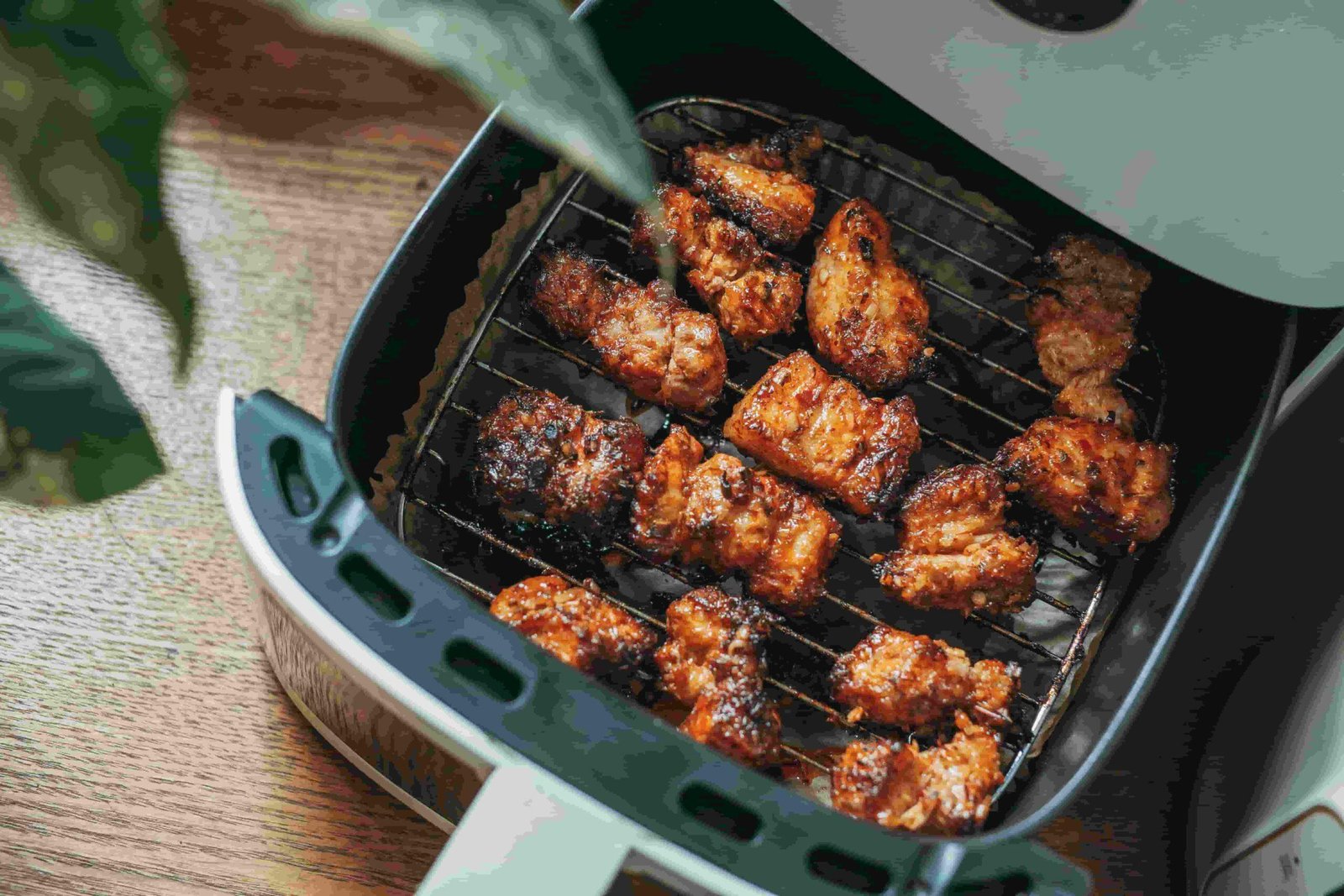
Chicken wings. The single best argument for owning one. Crispy skin without a deep fryer, done in 20-25 minutes, and the fat drips away instead of sitting in a pan of oil.
Roasted vegetables. Broccoli, brussels sprouts, cauliflower, all of them come out with genuine char and crisp edges in a fraction of the oven’s time. Toss with a little oil first or they dry out instead of browning.
Salmon fillets. Twelve minutes, no smell filling the kitchen the way stovetop salmon does, and the skin crisps up better than most pan methods manage without constant attention.
Frozen fries and tater tots. The category air fryers were basically built for. Better texture than the oven, no oil bath required, and nowhere near the mess of actual frying.
Bacon. Lays flat, renders evenly, and the grease drops straight into the bottom tray instead of splattering across your stovetop.
Reheated pizza. This one surprises people. A few minutes in the basket brings back a crisp crust in a way the microwave never will and the oven takes too long to bother with.
What Should Never Go In
Wet batter. Anything dipped in a loose, drippy batter falls apart and makes a mess of the basket instead of crisping. Breaded works. Battered doesn’t, unless it’s had time to set first.
Whole roasts and large cuts. Most baskets simply don’t have the volume, and uneven air circulation around a big piece of meat means an unevenly cooked one.
Leafy greens. Anything light enough to catch the airflow ends up plastered against the heating element instead of cooking evenly. Kale chips are the one exception, and only in small batches.
Cheese on its own. It melts straight through the basket holes before it has a chance to crisp into anything.
Aluminum Foil: The Actual Answer
Yes, you can use foil in an air fryer, with two real caveats. Weigh it down with food so it doesn’t get pulled into the heating element by the airflow, and don’t let it touch the element directly. Most manufacturer manuals confirm this directly rather than banning foil outright, despite how often the opposite gets repeated online.
Why People Are Actually Getting Rid of Air Fryers
Here’s the part most recipe roundups skip entirely. The standard air fryer basket is coated with PTFE, the nonstick chemical family better known by its brand name, Teflon. PTFE belongs to the PFAS group, commonly called forever chemicals because they barely break down once they’re in the environment or the body. That’s not a fringe claim. The EPA’s own research has tied PFAS exposure to a range of health effects including reproductive and immune effects, and the agency has stated there’s no level of exposure to some PFAS compounds it considers fully safe.
The coating itself is the issue, not just background chemical exposure. Air fryers run hotter and more directly against that coated surface than a stovetop pan ever does, which speeds up wear. Once a nonstick basket scratches, which most of them eventually do, that degraded coating has a more direct path into food than it would sitting undisturbed in a pan.
California has already responded to this at the regulatory level. Under state disclosure law, cookware manufacturers selling into California now have to disclose the specific chemicals in food-contact coatings, and some products marketed as “ceramic” have been found, through that same disclosure process, to actually contain PTFE. Marketing language and the actual chemical filing don’t always match.
None of this means your air fryer is definitely dangerous. It means the material question is worth asking before you buy the next one, the same way you’d ask it about any other pan that touches food at high heat. If you’re shopping for a replacement, stainless steel, ceramic, and glass-walled baskets are the three options currently marketed as PFAS-free, though “ceramic” alone isn’t a guarantee without a brand explicitly confirming it.
The Bottom Line
An air fryer earns its counter space on wings, vegetables, salmon, and reheated leftovers, full stop. What it doesn’t automatically earn is a pass on the material question everyone skipped when the appliance first took off. Worth five minutes of research before your next purchase, not because the sky is falling, but because “coated with something” turned out to be doing more work in that basket than most people realized.