America’s #1 Donut Brand, By the Numbers
Ask ten people which donut chain deserves the crown and you’ll spark a small fight. Dunkin’ or Krispy Kreme? Convenience or ceremony? Most of us have had this exact debate standing in a parking lot at 7 a.m., more invested than we’d ever admit out loud. So let’s settle it properly — not with vibes, but with numbers nobody bothers pulling up mid-argument.
Who’s Actually America’s #1 Donut Brand?
By sheer reach, there’s no contest. Dunkin’ runs somewhere north of 9,900 US locations — odds are you’ve driven past three without clocking it on your last errand run. That kind of saturation doesn’t happen by luck. It’s decades of strategy built around one goal: showing up wherever you already are, instead of asking you to detour for it.
But does being everywhere actually make you the best? That’s where things get interesting.
Is Krispy Kreme Really Smaller Than Dunkin’?
This is where most comparisons quietly get it wrong. You’ll see Krispy Kreme’s “1,400+ locations” tossed around as if it goes toe-to-toe with Dunkin’s numbers. It doesn’t, and the real gap is wider than that figure suggests. Krispy Kreme’s actual standalone US shops — the ones with the glowing Hot Light and the glass wall watching rings drop into glaze — sit closer to 340 to 360 total. Almost everything else counted in that 1,400 figure is global footprint and grocery-store distribution, which is a completely different animal from a shop you can walk into.
So no, it isn’t close on paper. Dunkin’ dominates on footprint, full stop. But ask a Krispy Kreme regular if that bothers them, and you’ll get a shrug in response. For plenty of people, scarcity is the whole appeal — going out of your way for a hot glazed ring feels nothing like grabbing one on autopilot between errands.
The Recipe Krispy Kreme Never Actually Wrote
Here’s where the phrase “secret donuts” earns its place in this conversation. In 1937, Vernon Rudolph opened the first Krispy Kreme in Winston-Salem, North Carolina — and the recipe wasn’t his own invention. He bought it. From a French chef in New Orleans. An honest-to-god secret yeast-raised donut formula, purchased outright, that became the foundation of one of the most recognized donut brands in the country.
That’s not a marketing flourish. It’s just what happened. The signature lightness people still associate with a fresh Krispy Kreme glazed donut traces back to a formula someone else built, sold once, and never explained publicly. Go looking for the actual recipe today and you’ll come up empty — one of the rare “secret recipe” claims in American food history that’s held up for close to ninety years without a single leak.
Tulsa’s Two Very Different Donut Secrets
Here’s a detail most people outside Oklahoma have never heard: Tulsa is quietly a donut town twice over. On one side, Daylight Donuts — a national chain most people don’t realize was born in Tulsa back in 1954 — now sits at roughly 950 locations spread across more than a dozen countries, staying almost invisible as a “brand” the way Dunkin’ never could.
On the other side, tucked inside Foolish Things Coffee Co., sits a shop actually named Super Secret Donuts — a small, scratch-made brioche operation where the founder has joked he’ll take the recipe details to his grave. No app, no drive-thru, limited weekend hours, and donuts that sell out fast enough that regulars show up early on purpose. It’s the exact opposite of Dunkin’s entire playbook, and it works precisely because it refuses to scale.
Same city, two completely different definitions of “secret.”
What’s Actually Inside Each Donut?
Since we’re already past the marketing, it’s worth checking the ingredient labels directly — they tell a different story than “secret recipe” branding implies.
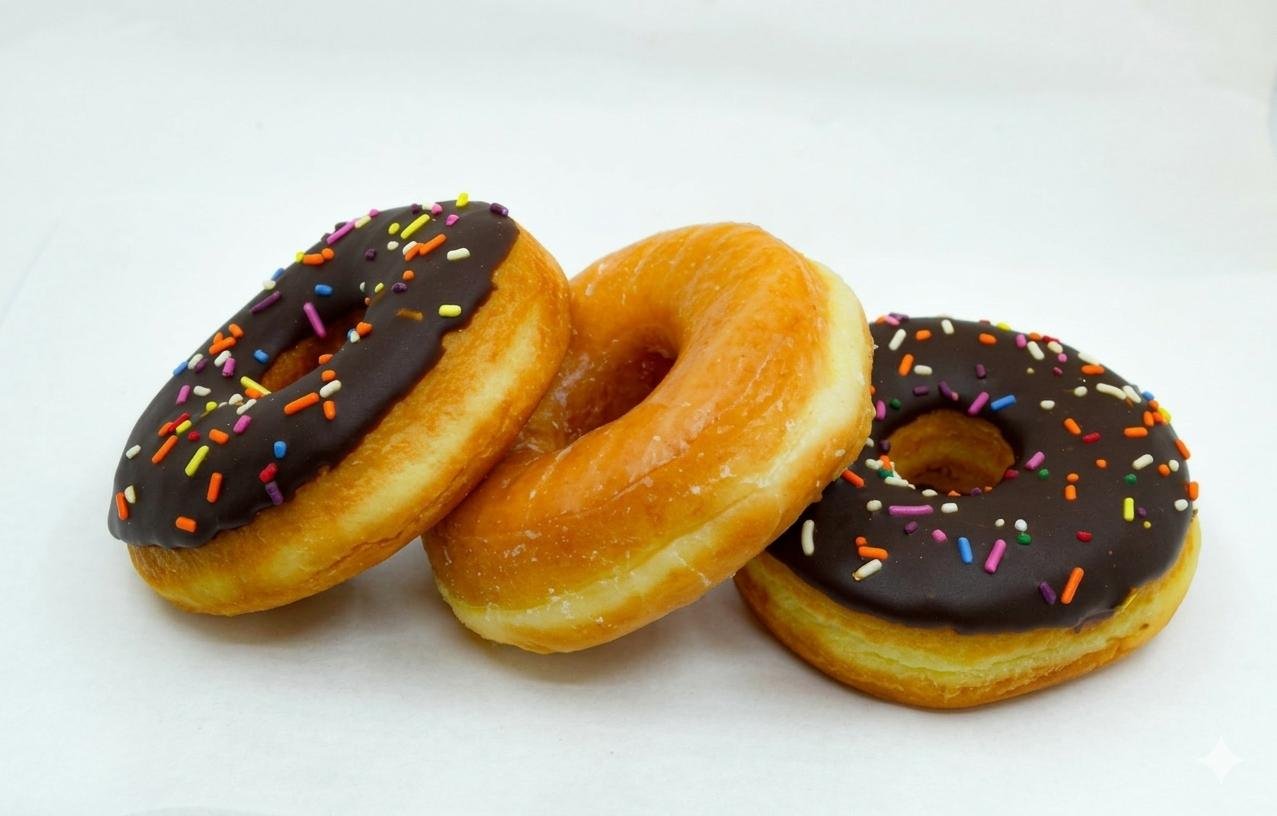
A Krispy Kreme Original Glazed, per its own retail packaging, comes down to enriched wheat flour, water, palm oil, soybean oil, and sugar as the core, with yeast, soy lecithin, wheat gluten, dried milk powder, and dried egg yolks rounding things out. The glaze stays simple — sugar, water, palm oil, agar, and a couple of gums for texture.
Dunkin’s glazed donut carries a longer list. Alongside the same wheat-flour-and-palm-oil base, it includes a “Yeast Donut Concentrate” blend — soy flour, whey, nonfat dry milk, sodium caseinate, sodium stearoyl lactylate, plus a gum blend of cellulose gum, guar gum, acacia gum, carrageenan, and xanthan gum, with turmeric extract for color. None of it is unusual for commercial baking, and none of it makes Dunkin’s donut unsafe — but on ingredient simplicity alone, Krispy Kreme’s classic glazed edges ahead, mostly because Dunkin’s dough concentrate handles more of the stabilizing work through additional additives.
Calorie-wise, the two land close enough that it barely matters which one you grab: a Dunkin’ glazed runs around 260 calories, a Krispy Kreme Original Glazed closer to 190-200. Neither is health food. Both are openly a treat — the ingredient list just shows how each company chose to get there.
Make Your Own Secret-Recipe Glazed Donut
If neither chain will hand over the real formula, the next best move is building your own. This version leans closer to the fluffy, yeast-raised style both brands are known for, made at home with nothing unusual in the pantry.
You’ll need:
- 3 cups all-purpose flour
- 1/4 cup granulated sugar
- 2 1/4 tsp instant yeast (one standard packet)
- 3/4 cup warm milk
- 2 large eggs
- 1/4 cup unsalted butter, softened
- 1/2 tsp salt
- Oil for frying (vegetable or canola)
For the glaze:
- 2 cups powdered sugar
- 1/4 cup milk
- 1 tsp vanilla extract
Method:
Warm the milk until it’s just above room temperature, then stir in the yeast and a pinch of the sugar. Let it sit until foamy, about 5-10 minutes — if it doesn’t foam, the yeast is dead and you’ll want a fresh packet.
In a stand mixer, combine the flour, remaining sugar, and salt. Add the eggs, softened butter, and the foamed yeast mixture. Mix on low until a shaggy dough forms, then knead on medium speed for about 5 minutes until smooth and elastic.
Cover and let the dough rise in a warm spot for about an hour, until roughly doubled. Roll it out to about 1/2-inch thickness on a floured surface, then cut rounds with a donut cutter (or a glass and a bottle cap for the center).
Let the cut donuts rest for another 30-45 minutes — this second rise is what gives them the airy, pillowy texture instead of something denser and bread-like.
Heat oil to 350°F and fry each donut for about 60-90 seconds per side, until golden brown. Drain on a wire rack, not paper towels, so the underside doesn’t turn soggy.
Whisk the glaze ingredients together and dip each donut while it’s still warm. The warmth helps the glaze set into that classic thin, shiny shell instead of sitting on top like frosting.
So Which Donut Actually Wins?
It depends what you’re optimizing for. Want a donut in the next five minutes, wherever you’re standing? Dunkin’s scale makes that close to guaranteed. Want the donut people plan their morning around — worth the drive, worth the wait? That’s where Krispy Kreme’s scarcity, or a shop like Super Secret Donuts, does something a 9,900-location chain structurally can’t replicate.
America’s “best” donut brand was never really about the donut. It’s about what you’re willing to trade — convenience for ceremony, or the other way around. Neither answer is wrong. You just have to actually pick one, next time you’re standing in that parking lot.