School Lunch Costs: Are You Paying More Than You Think?
Every August the same articles appear. Pack your child’s lunch, save money, here are forty ideas.
Almost none of them start with the question that actually decides the answer: what does school lunch cost you right now? For a large and growing number of American families, the honest answer is nothing, and packing a lunch to save money is a plan that saves nothing.
So before the cost breakdown, three things to check.
Check one: does your state feed every child free?
Nine states have adopted permanent statewide universal free school meals, covering every public school student regardless of family income. California, Colorado, Maine, Massachusetts, Michigan, Minnesota, New Mexico, New York, and Vermont.
New York is the most recent, starting in the 2025-2026 school year.
If you live in one of those nine, your child eats free at school and there is no application to fill in. Nothing you pack will beat that on price. Pack a lunch because your child prefers it, or because of allergies, or because the menu does not work for you. Those are all good reasons. Saving money is not one of them.
Check two: does your specific school feed every child free?
Even outside those nine states, individual schools and districts can serve free meals to all students through the federal Community Eligibility Provision, which applies in schools and districts serving enough low-income families.
This one catches people out, because it is decided at the school level and families often assume it does not apply to them. It costs one email to the school office to find out.
Check three: do you qualify for free or reduced price meals?
Federal eligibility for the 2026-2027 school year sets free meals for a family of four earning $42,900 a year or less, and reduced price meals for a family of four earning $61,050 or less.
Reduced price lunch costs the student 40 cents. Breakfast is 30 cents.
Forty cents. I have spent months on this site costing meals down to the penny, and I cannot build a packed lunch that competes with forty cents. Nothing beats it. If you are in that income band and have not applied, the application is the highest-return twenty minutes available to you this month.
There is a related figure worth knowing: national public school meal debt runs around $194 million a year. A meaningful share of that belongs to families who were eligible and never applied.
If you are paying full price
Now the arithmetic is worth doing, and it usually favors packing.
There is no national price for a paid school lunch, because local districts set their own. That is why I am not giving you an average to compare against; go and look at what your district charges, which is normally on the school website or the payment app.
Here is what a packed lunch costs using the same method as everything else on this site.
| Item | Cost |
|---|---|
| Two slices homemade bread | $0.16 |
| Peanut butter, 2 tbsp | $0.30 |
| Apple | $0.60 |
| Carrot sticks | $0.20 |
| Total | $1.26 |
A leftovers lunch runs cheaper still. A portion of rice and beans is 80 cents. A cup of lentil soup is about a dollar. Both go into a thermos and both are better food than a sandwich.
Compare $1.26 against your district’s price. In most districts, packing wins by a dollar or more per day, which over 180 school days is real money.
The part the listicles get wrong
They compare a packed lunch against the sticker price of a school lunch and stop there. Two things are missing from that.
Your time. Five to ten minutes a morning, 180 mornings. That is fifteen to thirty hours a year. It is not free and pretending otherwise is how these calculations flatter themselves.
Waste. A packed lunch your child does not eat costs the same and feeds nobody. School lunch waste is the school’s problem; packed lunch waste is yours. If your child reliably eats two thirds of what you pack, your real cost per eaten lunch is 50 percent higher than the table above.
Neither of these overturns the conclusion for a family paying full price. Both should stop you treating a dollar-a-day saving as though it were free.
What I would actually pack
Not because it is clever, but because it survives four hours in a bag without refrigeration and gets eaten.
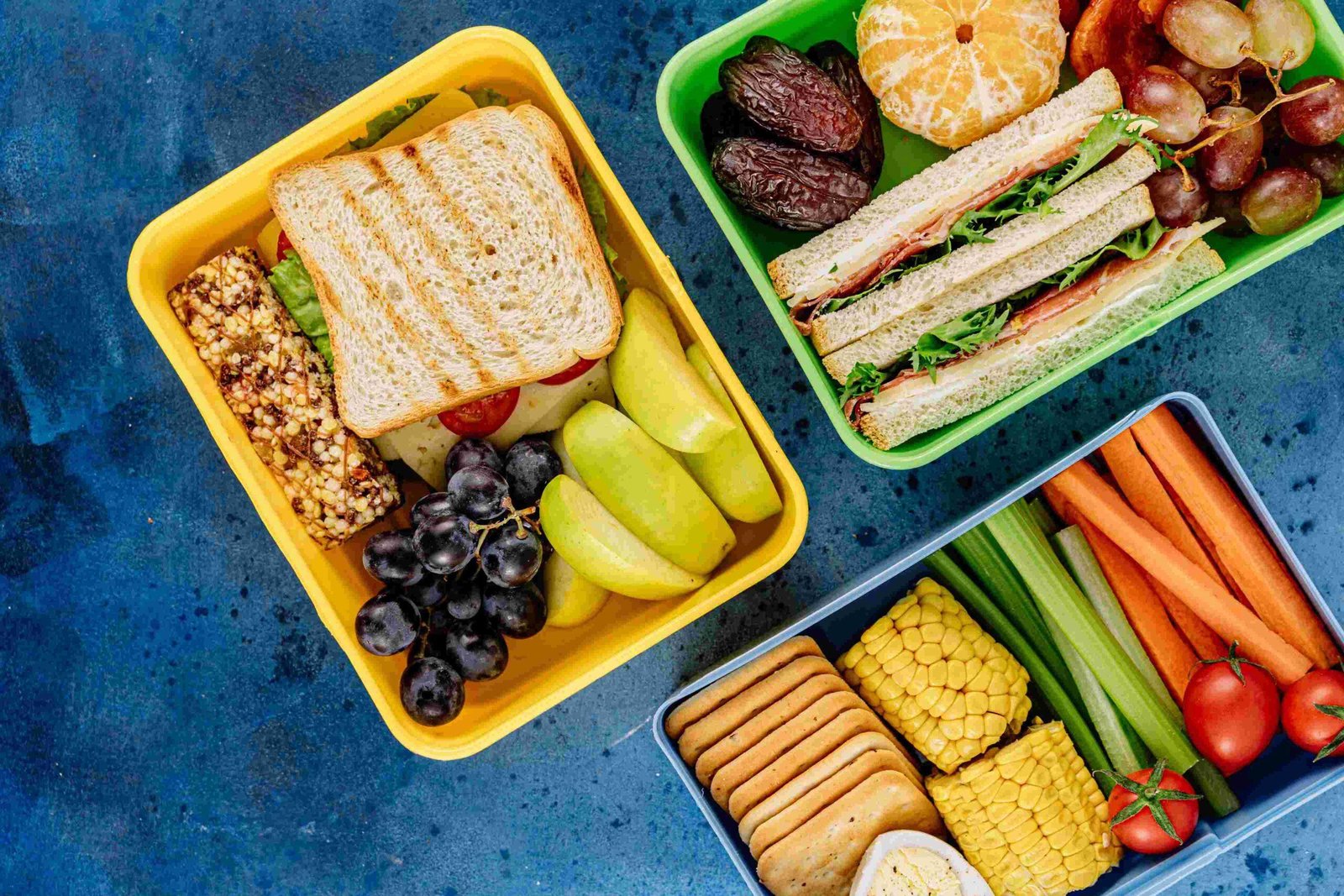
Something with protein that does not need to stay cold: peanut butter, a hard boiled egg, leftover beans. Something crunchy: carrots, cucumber, apple. Something that is a treat but not the whole lunch: a square of baked oatmeal, which works out to 84 cents and is closer to a flapjack than to breakfast.
Thermos food is the underused move. Anything you cooked last night at a dollar a portion goes to school hot and costs nothing extra to make, because you were cooking anyway.
The summary
If you live in one of nine states, school lunch is free and this whole calculation is moot.
If your income is at or under the thresholds, apply. Forty cents is unbeatable and a lot of eligible families never fill in the form.
If you are paying full price, packing saves roughly a dollar a day at the cost of about twenty hours of your year. That is a real trade and only you can price your mornings.
What you should not do is pack a lunch as a money-saving measure without first finding out whether you are paying for anything at all.