Five Pantry Pasta Sauces, Costed: From 33 Cents to 93 Cents a Serving
A pantry pasta sauce is one you can make at eight in the evening with nothing fresh in the house. No shopping, no planning, no chopping anything that came out of a fridge.
There are more of these than most people know. Here are five, each costed per serving, each buildable from a cupboard that holds oil, garlic, canned tomatoes, and one or two other things.
Pasta itself adds about 30 cents a serving on top of every figure below.
The five, ranked by cost
| Sauce | Cost per serving |
|---|---|
| Aglio e olio | $0.33 |
| Anchovy and breadcrumb | $0.56 |
| Tomato and garlic | $0.65 |
| Cacio e pepe | $0.71 |
| Butter and onion tomato | $0.80 |
| Tuna and tomato | $0.93 |
All estimates from ordinary supermarket prices. The gap between the cheapest and the priciest is under 60 cents, which tells you something useful: at this level, what you choose matters far less than whether you cook at all.
1.Aglio e olio, 33 cents
Garlic, oil, chili. The floor of the entire genre.
Six cloves of garlic sliced thin, gently cooked in six tablespoons of olive oil over low heat until pale gold, with a good pinch of chili flakes. Toss with the drained pasta and a splash of the pasta water.
The whole dish depends on one thing: the garlic must not brown. Start it in cold oil, keep the heat low, and pull the pan off when it turns the color of straw. Browned garlic is bitter and there is no fixing it.
Parsley is traditional and adds 15 cents a serving. Without it, this is the cheapest thing you can put on pasta that still tastes like a dish rather than a compromise.
2.Anchovy and breadcrumb, 56 cents
The one nobody makes and everybody should.
Warm a few anchovy fillets in olive oil with garlic over low heat until they dissolve completely. They will. What is left does not taste of fish; it tastes savory in a way that is hard to place, which is exactly why anchovies survive in so many cuisines.
Separately, toast a handful of breadcrumbs in oil until crisp and golden. Toss the pasta in the anchovy oil, then scatter the crumbs over the top.
The crumbs are the point. They give a bite that a smooth sauce cannot, and if you have stale bread sitting around, they cost nothing.
3.Tomato and garlic, 65 cents
The default, and the one I have written up in full elsewhere on this site with method and costings.
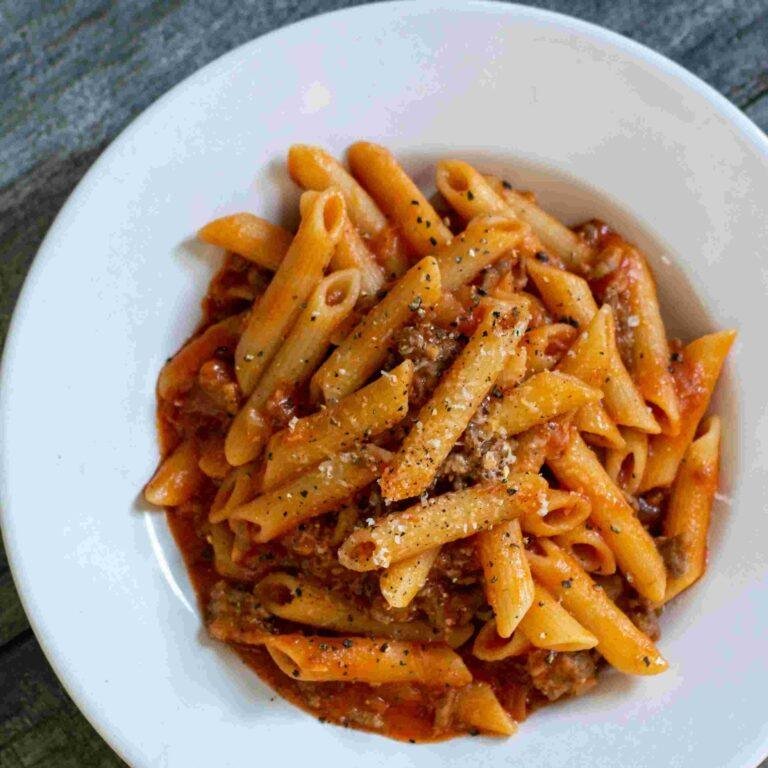
Whole peeled tomatoes crushed by hand, garlic started in cold oil, oregano, chili, fifteen minutes. Buy whole peeled rather than diced: diced tomatoes are treated with calcium chloride across every cut surface and will not break down, while in whole tomatoes the additive only reaches the skin.
4.Cacio e pepe, 71 cents
Hard cheese and black pepper, and nothing else at all.
Toast coarsely cracked pepper in a dry pan for thirty seconds. Off the heat, combine finely grated hard cheese with a few spoonfuls of hot pasta water to make a paste, then toss with the drained pasta.
The failure mode is scrambling the cheese into strings, and it comes from heat. Take the pan off the burner, let it cool for a moment, and mix off the heat. Cheese and hot water want to become sauce; cheese and a hot pan want to become rubber.
This is the priciest per ounce of ingredient on the list and still under a dollar, because you use so little.
5.Butter and onion tomato, 80 cents
A can of tomatoes, five tablespoons of butter, one onion peeled and cut in half. Everything into a pan, simmer 45 minutes, remove the onion halves, done.
No chopping, no stirring, no browning. Made famous by Marcella Hazan, and the reason it is famous is that it produces a sauce far better than the effort suggests. The butter rounds the acidity of the canned tomato in a way oil does not.
The onion is there to flavor the sauce and then leave. You can eat it separately, and you should.
6.Tuna and tomato, 93 cents
The most expensive and the only one that is a full meal on its own.
Build the tomato and garlic sauce above, then fold in a drained can of tuna at the very end, off the heat, in large flakes. Do not simmer it; the tuna is already cooked and boiling it turns it grainy.
At 93 cents this adds around 17 grams of protein a serving, which makes it the best value on the list by the measure I usually care about most.
What these have in common
Every one is oil or fat, something savory, and heat. That is the whole architecture. The tomato is optional, the cheese is optional, the fish is optional.
Once you see that, the list stops being six recipes and becomes a method you can improvise inside. Olives instead of anchovies. A spoon of miso if you have it. Frozen peas at the end. Whatever is in the cupboard, warmed in fat, tossed with pasta and a splash of its water.
The one technique that applies to all six
Finish the pasta in the pan with the sauce and a splash of the water you cooked it in.
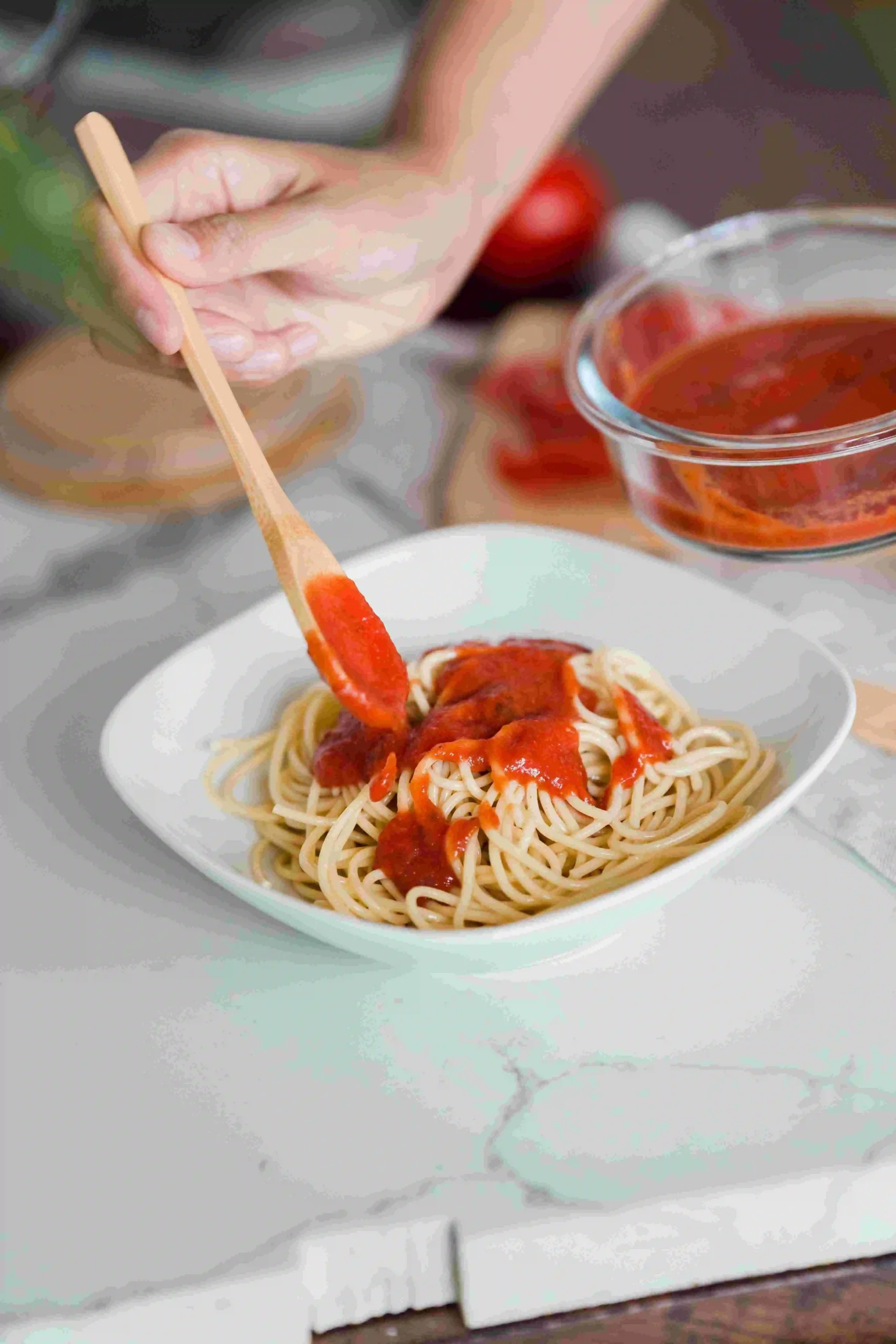
Drain the pasta a minute early, tip it into the sauce, add a few spoonfuls of pasta water, and toss hard over heat for a minute. The starch in that water binds the fat and the liquid into something that coats each strand.
It takes sixty seconds, costs nothing, and is the difference between every sauce here working and every sauce here sitting in a puddle at the bottom of the bowl, if you take one thing from this recipe, take that