No-Knead Bread: 66 Cents of Ingredients, and the Oven Costs Half as Much Again
When I ranked eight grocery staples by cost per calorie, flour won by a distance. Thirty-three cents per thousand calories, cheapest thing in the store, beating potatoes and bread and everything with a face.
The obvious follow-up question is what happens if you turn the cheap thing into the expensive thing yourself. Store bread runs $1.82 a pound as a US city average, per BLS data for July 2026. Flour runs 55 cents a pound. So bread should be enormously cheaper to make than to buy.
It is. But not by as much as every “bake your own and save” article claims, and the reason is the part they all leave out.
What it costs
| Ingredient | Amount | Cost |
|---|---|---|
| All-purpose flour | 500 g | $0.60 |
| Instant yeast | 1/4 tsp | $0.04 |
| Salt | 2 tsp | $0.02 |
| Water | 400 ml | free |
| Ingredients total | one 800 g loaf | $0.66 |
That is 38 cents a pound of finished bread. Against $1.82 for store bread, it looks like a 79% saving.
Now the part nobody counts.
The oven is an ingredient
This loaf needs a 45-minute bake at 450°F, plus about 30 minutes preheating a heavy pot. Call it 75 minutes of a hot oven.
A typical electric oven draws roughly 2 to 2.5 kilowatts but cycles on and off to hold temperature, so actual consumption over 75 minutes lands somewhere near 1.5 to 2 kilowatt-hours. At an electricity rate of 17 cents per kilowatt-hour, that is roughly 25 to 34 cents.
I want to be clear that this is an estimate, not a measurement. Your oven, your insulation, and your electricity rate all move it. Gas ovens work out differently again. Look up your own rate on your bill and multiply. https://americankitchentales.com/buying-in-bulk-real-savings-or-a-false-bargain/
Using 30 cents:
| Cost | |
|---|---|
| Ingredients | $0.66 |
| Oven energy (estimated) | $0.30 |
| Real total | $0.96 |
55 cents a pound. Still about 70% below store bread. But energy is nearly a third of the total cost, and no bread-costs-nothing article I have read includes it.
The practical consequence: bake two loaves at once if your pot situation allows, or bake bread on a day you are already using the oven. The energy cost is almost entirely fixed per bake, not per loaf.
Ingredients
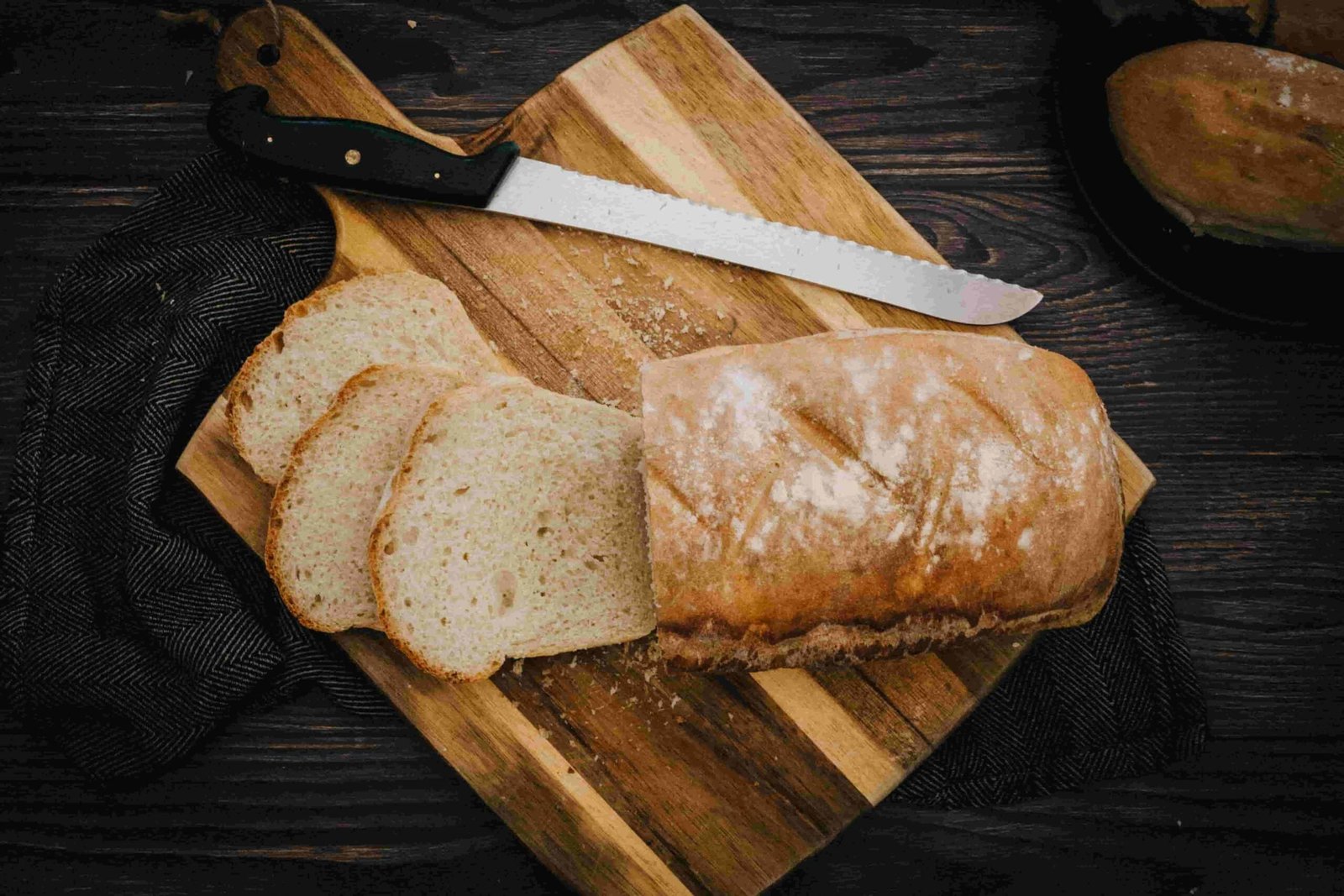
Makes one loaf, about 12 slices.
- 500 g (about 4 cups) all-purpose flour
- 400 ml (about 1 2/3 cups) water, room temperature
- 2 tsp salt
- 1/4 tsp instant yeast
That is the whole list. No sugar, no oil, no milk, no bread flour, no stand mixer.
Method
Night before. Stir the flour, salt, and yeast together in a large bowl. Add the water and mix with a spoon or your hand until there is no dry flour left. It will look like a shaggy, sticky mess. That is correct. Do not knead it.
Cover the bowl and leave it on the counter for 12 to 18 hours. Twelve is the minimum. Eighteen tastes better. The yeast quantity is deliberately tiny so the dough ferments slowly overnight rather than blowing out in three hours.
Next day. Put a heavy lidded pot into the oven, a Dutch oven or any oven-safe pot with a lid, and heat the oven to 450°F (230°C). Let the pot heat for 30 minutes. It needs to be genuinely hot.
While it heats, scrape the dough onto a well-floured surface. Fold it over on itself three or four times, shape it into a rough ball, and let it rest on a piece of parchment paper.
Take the pot out, lift the dough in using the parchment, put the lid on, and return it to the oven.
Bake 30 minutes covered, then remove the lid and bake 15 minutes more, until the crust is deep brown. Darker than feels comfortable is usually right.
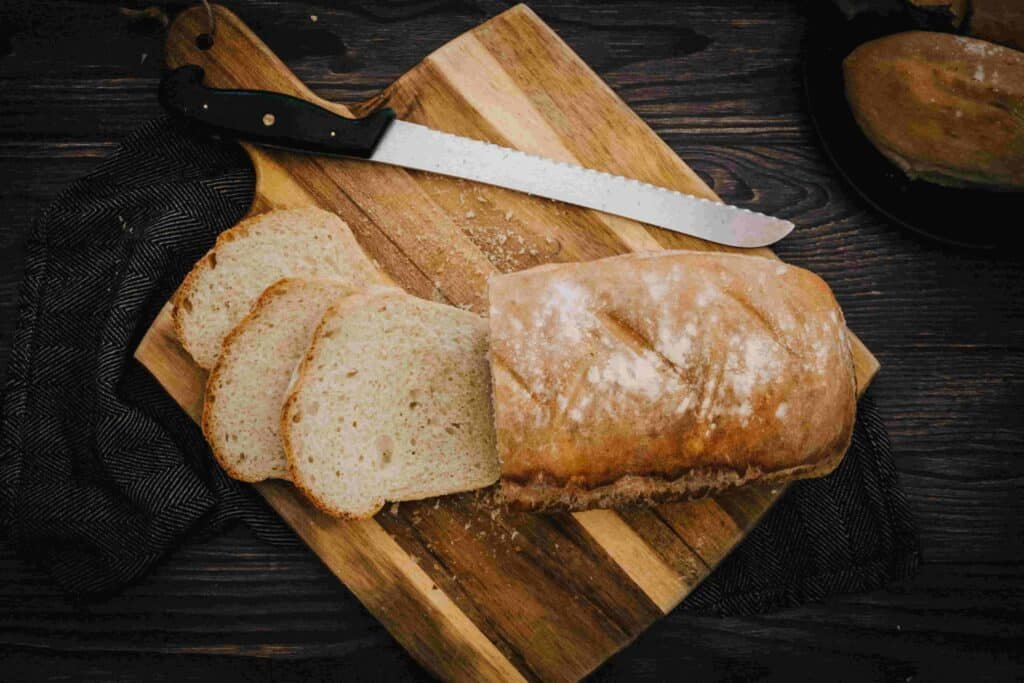
Cool on a rack for at least an hour before cutting. Cutting hot bread compresses the crumb and makes it gummy. This is the hardest instruction in the recipe.
Nutrition, estimated per slice
| Per slice | |
|---|---|
| Calories | 152 |
| Protein | 4 g |
| Fat | 0.4 g |
| Carbohydrates | 32 g |
| Fiber | 1 g |
| Sodium | about 325 mg |
Based on 12 slices from an 800 g loaf, calculated from USDA reference values for all-purpose flour. Estimate, not a lab analysis.
Notes
On the yeast. A quarter teaspoon looks like a mistake. It is not. Long slow fermentation is what produces the flavor here; adding more yeast gives you a faster, blander loaf.
On the pot. The lid is doing the real work. It traps steam from the dough, which keeps the crust soft long enough for the loaf to expand fully before setting. No lid, no oven spring, flat bread. If you have no lidded pot, a stainless bowl inverted over the loaf on a baking sheet works.
On the flour. Store brand all-purpose is the same product as branded all-purpose and costs less. This is one of the few categories where I think that is straightforwardly true with no caveat.
Storage. Cut side down on a board, uncovered, two days. Plastic bags make the crust go soft and leathery. After two days, slice it and freeze it; it toasts straight from frozen.
The honest comparison. This does not beat the cheapest store bread on convenience, and it never will. What it beats is the $4 to $6 bakery loaf, which is what this bread actually resembles. Comparing it to a 99-cent supermarket sandwich loaf is comparing two different products that happen to share a name.