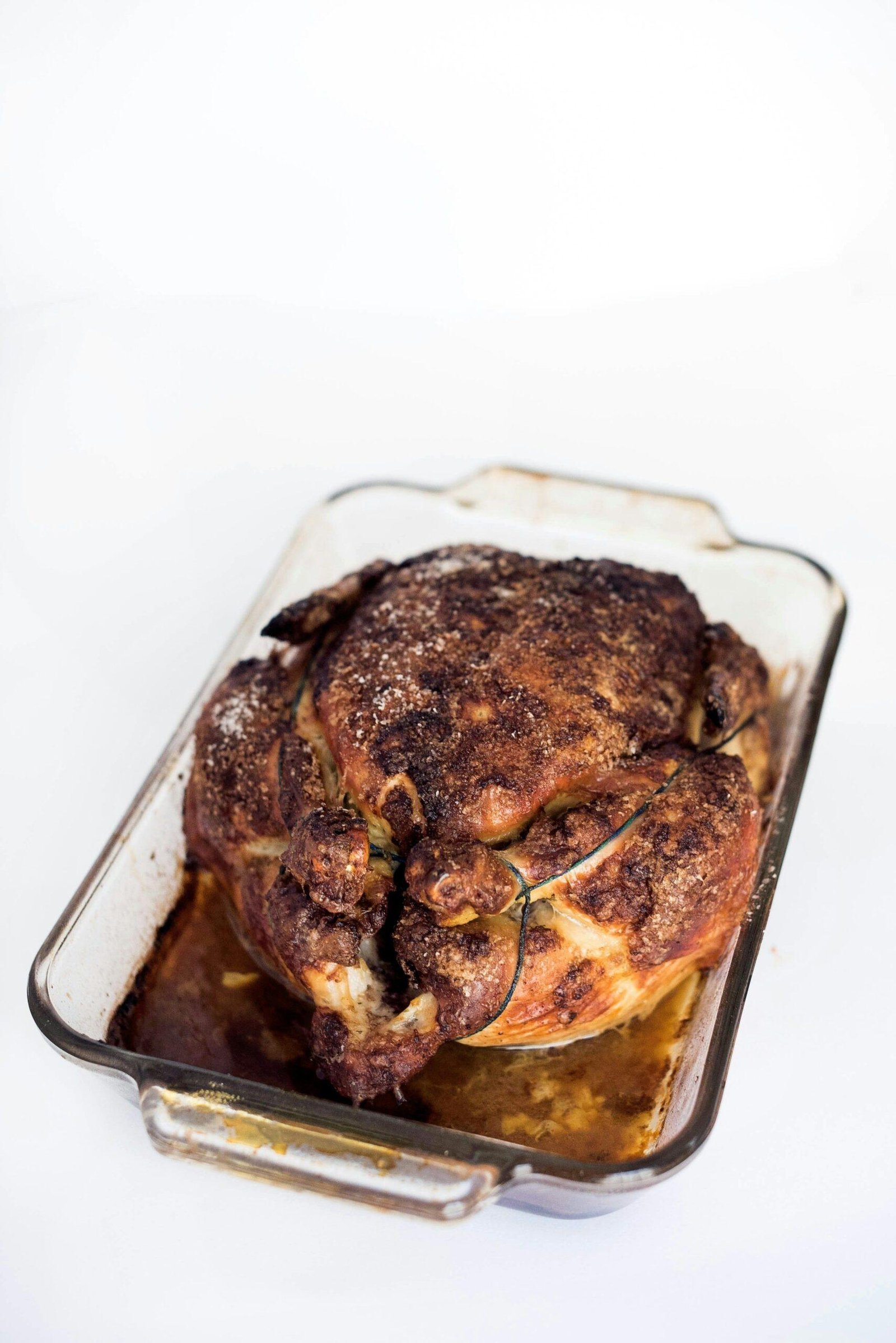
Rotisserie Chicken vs Raw Chicken: The Real Cost Per Pound
The rotisserie chicken has a reputation as the smartest move in the grocery store — a whole cooked bird for less than the price of raw breast meat, no oven time required. That reputation is mostly true, but “mostly” is doing some work. Compared to raw boneless breast, a rotisserie chicken really is the better deal. Compared to a raw whole chicken you roast yourself, you’re paying a real premium for the convenience — just a smaller one than most people assume.
I priced out all three side by side, on a cost-per-pound-of-edible-meat basis, to see exactly where rotisserie chicken lands.
The cost, per pound of meat you actually eat
| Option | Price | Edible meat yield | Cost per lb of meat |
|---|---|---|---|
| Rotisserie chicken (whole, cooked) | $7.99 | ~1.75 lb | $4.56 |
| Whole raw chicken, roasted at home | $1.79/lb raw (4.5 lb bird = $8.06) | ~2.1 lb | $3.84 |
| Boneless, skinless chicken breast, raw | $4.49/lb raw | ~0.75 lb cooked per raw lb | $5.99 |
| Bone-in leg quarters, raw | $1.49/lb raw | ~0.65 lb cooked per raw lb | $2.29 |
The numbers land in an order most people wouldn’t guess: rotisserie chicken beats raw boneless breast, but a whole raw chicken you cook yourself still beats rotisserie — and leg quarters beat everything
Why the gap between rotisserie and raw whole chicken is smaller than expected
A raw whole chicken and a rotisserie chicken are close to the same product at two different points in the process. The store already paid for the bird, the labor, the oven time, and the packaging that goes into a rotisserie chicken, and it still usually costs less per pound of meat than raw boneless breast. That’s because bone-in, skin-on cuts are simply cheaper per pound than boneless breast to begin with — rotisserie chicken inherits that price advantage even after all the added labor.
The premium you’re actually paying for rotisserie chicken isn’t “cooked vs raw.” It’s “someone else’s labor vs your oven time,” and on a whole bird, that gap works out to about 70 cents a pound — roughly the cost of not spending an hour and a half with the oven on.
Why boneless breast loses on this comparison every time
Boneless, skinless breast is priced for convenience twice over: no bones to work around, and no fat to render off. Both of those conveniences cost money, and they cost more than rotisserie chicken’s convenience does. A raw chicken breast also loses more of its raw weight to cooking shrinkage than dark meat does, since it has less fat to retain moisture — so the price per raw pound understates what it actually costs per pound of meat that ends up on the plate.
When rotisserie chicken is still the right call
None of this means rotisserie chicken is a bad buy — it means it’s a convenience purchase, not a savings purchase, when measured against a whole bird you’d roast yourself. It earns its price back in a few real ways a raw comparison won’t capture:
- Time. No prep, no roasting, no resting. Dinner in the time it takes to shred meat off a bone.
- Broth for free. The carcass still makes a full pot of stock, same as a bird you roast yourself — that part of the value doesn’t disappear just because someone else did the cooking.
- Smaller households. If a whole raw chicken means eating chicken four nights in a row before it goes bad, the math changes. Rotisserie chicken sold pre-portioned or eaten fresh avoids that waste calculation entirely.
The bottom line
If the choice is rotisserie chicken versus raw boneless breast, rotisserie wins on price without a fight. If the choice is rotisserie versus a whole raw bird you’re willing to roast yourself, you’re paying about 70 cents a pound for someone else to do it — which is either an easy call or a real savings opportunity, depending entirely on how much your own oven time is worth to you.
How the yield numbers were calculated
Edible meat yield is the part most price comparisons skip, and it’s the part that actually decides this comparison. A raw whole chicken loses weight to bone, skin trimmed off during eating, rendered fat, and moisture lost in the oven — typically landing around 45-50% of raw weight once all of that is accounted for. A rotisserie chicken loses a similar share, but store rotisserie birds also tend to run smaller than a chicken bought raw for home roasting, which is part of why the yield here comes in a bit lower per dollar than a home-roasted bird of the same price.
Boneless skinless breast has no bones or skin to lose, but it loses more of its weight to moisture during cooking than dark meat does, since it carries less internal fat to hold onto during the cooking process. That’s the detail that keeps breast meat from looking as cheap on paper as its raw price per pound suggests.
Frequently asked questions
Is Costco’s $4.99 rotisserie chicken a better deal than this comparison suggests? Yes, meaningfully. Costco’s rotisserie chicken is priced as a loss leader to bring shoppers into the store, and at $4.99 for a bird similar in size to a $7.99 grocery store rotisserie chicken, the cost per pound of meat drops closer to $2.85 — which beats even a home-roasted whole bird. That price is the exception, not the rule, for rotisserie chicken generally.
Does a rotisserie chicken save money over meal-prepped raw chicken bought in bulk? Usually not. Family-pack raw chicken thighs or leg quarters, bought on a per-pound basis when on sale, routinely beat rotisserie chicken’s cost per pound, even before factoring in that dark meat cuts already have the lowest cost per pound of any comparison here.
Is the sodium content different between rotisserie and home-roasted chicken? Often yes. Store rotisserie chickens are frequently brined or injected with a salt solution before cooking to improve moisture retention and shelf life, which can push sodium content noticeably higher per serving than a chicken salted and roasted at home with a known amount of salt.
Does the size of the household change which option makes sense? It does, more than the per-pound price does. A single person or couple is more likely to let a whole raw chicken go to waste before finishing it, which erases any savings from cooking it at home. A larger household that will finish a whole bird within a few days gets the full benefit of the cheaper home-roasted price.