Shrinkflation Is Real. It Is Also Not Why Your Grocery Bill Doubled
Category: Grocery Prices
I spent years doing inventory control, which mostly means I spent years counting things and then arguing with people about the count. One habit sticks with you from that work: you never trust the box. You trust the unit.
A pallet of “24 cases” tells you nothing until you know what a case holds this month. Suppliers change that. Not maliciously, usually, but they change it, and if your system is still counting cases while the case got lighter, your numbers drift. Every stock auditor I worked with had a story about a shortage that turned out to be a repack.
American grocery shelves have been running the same drift for years, except nobody audits your pantry. That is shrinkflation: the box costs what it always did, and there is less inside.
I went looking for how much of the 2020s grocery pain this actually explains. The answer annoyed me, because it does not fit either side of the argument. https://americankitchentales.com/do-grocery-rewards-apps-and-loyalty-cards-actually-save-you-money/
The number that deflates the outrage
The Government Accountability Office spent from February 2024 to July 2025 auditing this exact question. They pulled Bureau of Labor Statistics data covering 2019 through 2024, plus retail scanner data on thousands of items.
Overall consumer prices rose 34.5% over those five years. Downsizing accounted for less than one tenth of one percentage point of that.
Not one point. One tenth of one point. Around 0.06.
That is the whole shrinkflation contribution to headline inflation, according to the federal auditors who looked hardest at it. If you have been telling people that companies shrank your groceries and that is why your bill exploded, the federal auditors disagree with you, and they showed their work.
The reason is boring and structural. Most of what got expensive cannot be shrunk. Rent cannot be shrunk. A gallon of gasoline is a gallon. Your car insurance premium has no package size. Shrinkflation can only happen in the aisles where things come in boxes, and those aisles are a modest slice of what a household spends.
So the story is over, right? Corporate greed debunked, everybody go home.
No. Because I read the rest of the report.
The number that brings the outrage back
Inside the categories where downsizing actually happened, the effect is not small at all.
GAO looked at seven categories: coffee, cereal, paper towels, toilet paper, laundry detergent, toothpaste, and pain relievers. In the top five categories for downsizing, size changes alone contributed between 1.6 percentage points of inflation (cereal) and 3.0 percentage points (household paper products).
And here is the part I keep coming back to, the per-unit math:
What got smaller | Average per-unit price increase on downsized items |
| Coffee | 32% |
| Paper towels | 12% |
Thirty-two percent on coffee. That is not a rounding error on a household that buys coffee every week. GAO’s own framing is that this can meaningfully hit households who keep buying these products at the same volume, which is exactly the household that does not read audit reports.
Then there is the detail that made me sit up, because it is the same pattern I used to see in warehouse data.
Fewer than 5% of items in each category were downsized. Tiny share. But those items were not random. In cereal, 1.1% of items got downsized, and those items were 8.6% of category sales. In toothpaste, 0.4% of items, 2.3% of sales. Paper towels that had been shrunk made up 38.6% of total revenue in their category.
Read that again. The shrunk products are the ones people actually buy.
This is why the aggregate number and the lived experience both feel true. Statistically, a small fraction of SKUs changed. Practically, the changed SKUs are sitting in your cart. You are not imagining it, and the GAO is not lying to you. You are just looking at two different denominators.
Why it works on us
Manufacturers are not doing this because they are cartoon villains. They are doing it because it works, and the research on why it works is genuinely uncomfortable to read.
GAO reviewed six studies on how shoppers respond. The consistent finding: people react less to a product shrinking than to the same product getting more expensive. One study found that 93% of shrunk items saw no statistically significant drop in the number of packages sold. Another found that raising a price by 1% costs you about 1.95% in sales, nearly double the damage.
A peer-reviewed paper in Marketing Science went further. Downsizing is more than five times as common as upsizing, and sales tend to rise around 6% after a product is downsized.
Sales go up. Not down. Up.
So a manager choosing between “raise the price 8%” and “cut the size 8%” is choosing between losing customers and gaining them. That is not a hard call. It is barely a call.
I want to be fair here. There are real cost pressures behind some of it, and redesigning packaging is not free, which is one reason it is not more widespread. But the incentive structure is what it is, and pretending it is purely about input costs ignores the fact that the sales data rewards the quiet option.
The measurement problem nobody has solved
One more study complicates things. An economist at UMass Amherst, publishing in the International Journal of Industrial Organization in January 2026, tracked packaged food sizes from 2012 to 2019 and found the average size fell 14.6%, adding close to four percentage points to measured food inflation over that stretch.
That looks like it contradicts GAO. Different periods, different methods, different scope: one is packaged food across eight years, the other is all consumer prices across five. Both can be right. But it tells you the ceiling on our confidence here is lower than either headline suggests.
I do not think this is a solved question. I think it is a question where the honest answer is “depends what you buy,” and that is a terrible headline, which is why you rarely see it.
What I do about it now
Nothing clever. Two habits.
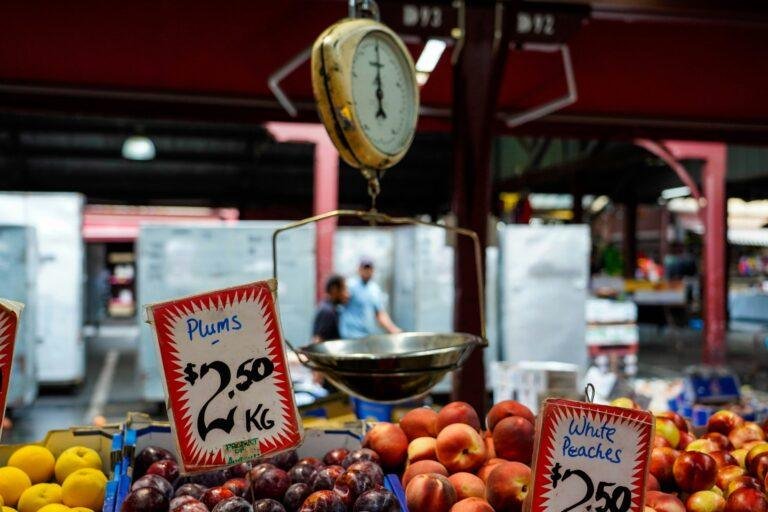
I read the unit price tag, not the shelf price. Every US supermarket posts price per ounce or per hundred count on the shelf label, usually in smaller type off to the side. It is the only number on that label that survives a package change. If you compare two coffees by the number on the front, you are comparing packaging decisions. If you compare by price per ounce, you are comparing coffee.
And I photograph the shelf label for the five or six things I buy constantly. Coffee, detergent, paper towels, whatever your list is. Memory is useless for this. Nobody remembers that the bag was 12 ounces in March. A photo remembers.
That is it. There is no trick that beats a company with a packaging department. There is only knowing the actual unit price, which is the same thing every stock auditor does on a Monday morning, and which the label is already telling you if you bother to look.
Awareness is drifting, incidentally. In a CivicScience survey, 56% of US shoppers said in 2025 they had noticed items shrinking without a price drop, down from 61% the year before. Whether that means less shrinking or less noticing, I could not tell you.
France now requires retailers to post a visible notice on downsized products and leave it up for two months, under a decree from July 2024. A US bill, the Shrinkflation Prevention Act, was introduced in February 2024 and has not passed as of early 2026. Until it does, the label is on you.
source
https://www.gao.gov/products/gao-25-107451 https://www.retailbrew.com/stories/2025/09/04/shrinkflated-paper-towels-accounted-for-38-6-of-category-sales-revenue