The Supermarket Tomato Lost Its Flavor to an Accident Nobody Noticed for Eighty Years
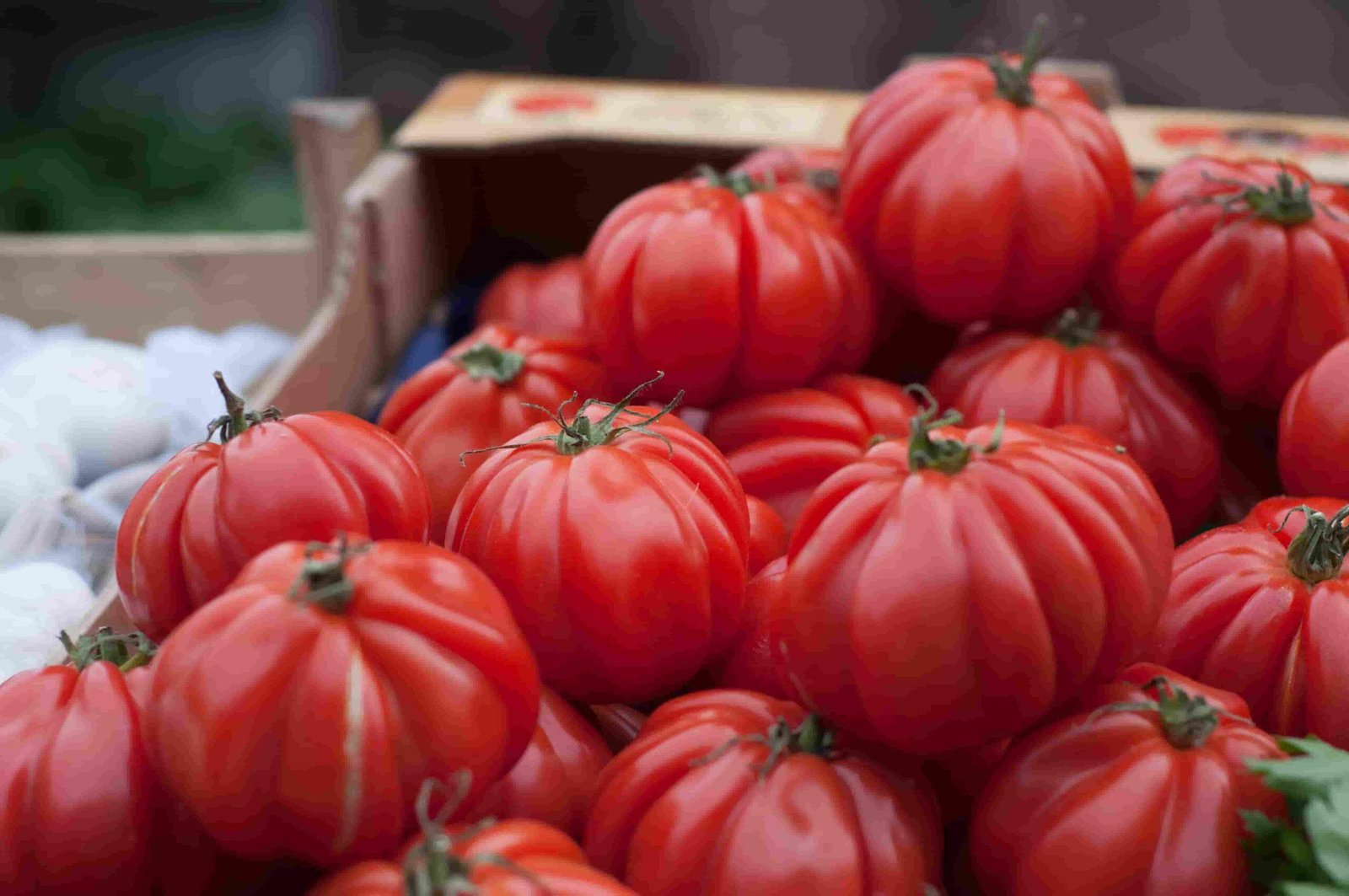
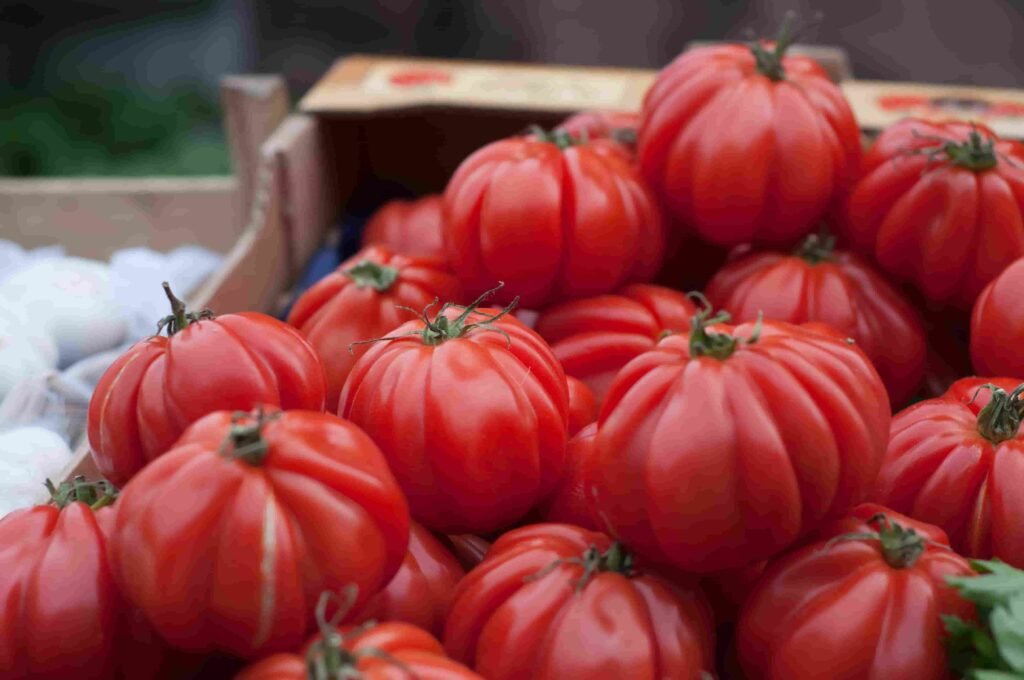
Everyone has had the experience. You buy a tomato that looks perfect, deep even red all the way around, no blemishes, and you slice it open and it tastes of almost nothing. Water and a faint sourness. You blame the season, or the store, or your own memory of better tomatoes.
Your memory is right. And the reason is a single mutation that a breeder found by accident in the late 1920s and that nobody understood until 2012.
The accident
Wild and traditional tomatoes ripen unevenly. The shoulders, the part around the stem, stay dark green while the rest of the fruit turns red, and the ripe fruit often keeps patches of green and yellow.
For a grower this is a problem. Uneven color makes it hard to judge when to pick, hard to grade a crate, and produces fruit that looks damaged to a shopper who has been taught that red means ripe.
Then, sometime around the late 1920s, breeders came across a naturally occurring mutation that made the fruit ripen uniformly. No green shoulders. Even scarlet, all over.
They did what anyone would have done. They bred it in, deliberately, everywhere. Growers selected for the trait for roughly seventy years. The mutation, known simply as uniform ripening, ended up in effectively every commercial cultivar on earth.
Nobody thought they were making a trade. Genetics at the time was far too rudimentary to reveal that anything had been given up.
What was actually happening
In June 2012, a team led by Ann Powell at UC Davis and James Giovannoni at the Boyce Thompson Institute and USDA, working with colleagues at Cornell and in Spain and Turkey, published the answer in Science.
The uniform ripening trait comes from a mutation in a gene called SlGLK2, a Golden 2-like transcription factor. The mutation is an extra DNA base. That single insertion disrupts the sequence, truncates the protein it codes for, and leaves it inactive.
And that protein has a job. It drives the development of chloroplasts in the developing fruit.
Chloroplasts are the structures that capture light and turn it into sugar. They are also where many of the aroma compounds that make a tomato smell like a tomato are produced.
So the dark green shoulders were never a defect. The green was chlorophyll, sitting in chloroplasts, quietly manufacturing the sugar and the aromatics that made the fruit taste of something. Breeding out the green bred out the machinery.
When the researchers examined twenty-five commercial varieties from around the world, they found the mutation in every one. Harry Klee at the University of Florida, who studies flavor genetics, has said the mutation is present in essentially all modern supermarket varieties.
The team tested the reverse as well. Inserting an intact copy of the gene raised glucose and fructose in the ripe fruit by up to 40 percent.
They were not allowed to taste them. USDA regulations prohibit eating experimental produce, so the best-sugared tomatoes grown in decades went uneaten.
The part where it stops being simple
I want to be careful here, because this story is usually told as though one gene explains the whole thing, and the scientists themselves do not say that.
David Francis, a tomato breeder at Ohio State, argued at the time that the real problem is the production system: commercial tomatoes are picked before they are ripe, which interrupts the conversion of starch into sugar inside the fruit. He also pointed out that roughly 80 percent of a tomato’s sugar is made in the leaves and moved into the fruit afterward, which limits how much the fruit’s own chloroplasts can matter, and that results from small greenhouse pots may not hold in a field.
Both things can be true. Breeding removed part of the flavor machinery, and the harvest and shipping system removes more of what is left. The gene explains why even a supermarket tomato ripened properly on a windowsill still disappoints. The picking explains the rest.
Later work has widened it further. Modern varieties are also lower in several volatile aroma compounds than heirlooms, because the alleles that make those compounds were selected against too, without anyone intending it.
Why it has not been fixed
Giovannoni gave the answer plainly when the paper came out. Producers do not get paid more for flavor.
A grower is paid by weight, for fruit that survives shipping and looks uniform on a shelf. Nothing in that chain rewards sugar or aroma. A breeder who restored SlGLK2 would produce a tomato that tastes better, ripens unevenly, and grades worse, and the market would punish them for it.
There is also a practical use for the discovery that cuts the other way. Now that the gene is identified, commercial breeders can screen seedling DNA for the mutation instead of waiting for mature fruit. The finding made it easier to keep selecting for the thing that removed the flavor.
Growers who care more about taste than appearance can screen the other direction and choose plants without the mutation. Heirloom varieties and wild species never acquired it, which is exactly why an heirloom tomato with ugly green shoulders tastes the way it does.
What this means at the store
The green shoulders are the tell. A tomato with uneven color, patches of green or yellow at the top, is much more likely to have the working gene. The perfectly uniform red one almost certainly does not.
That is the opposite of what most people have been taught to look for, and it is the single most useful thing in this article.
Beyond that, do not refrigerate them. Tomatoes lose flavor and turn mealy below about 55°F and the change does not reverse, which means a tomato that started out compromised by breeding can be finished off by your fridge door.
A hundred years ago someone picked the prettiest tomato in a field and saved its seeds. It was a completely reasonable decision, made with the information available, and it quietly rewired what a tomato tastes like for everyone born afterward.